
Learn how to make healthy eating delicious with leading chefs and doctors at the Diabetes Summit.
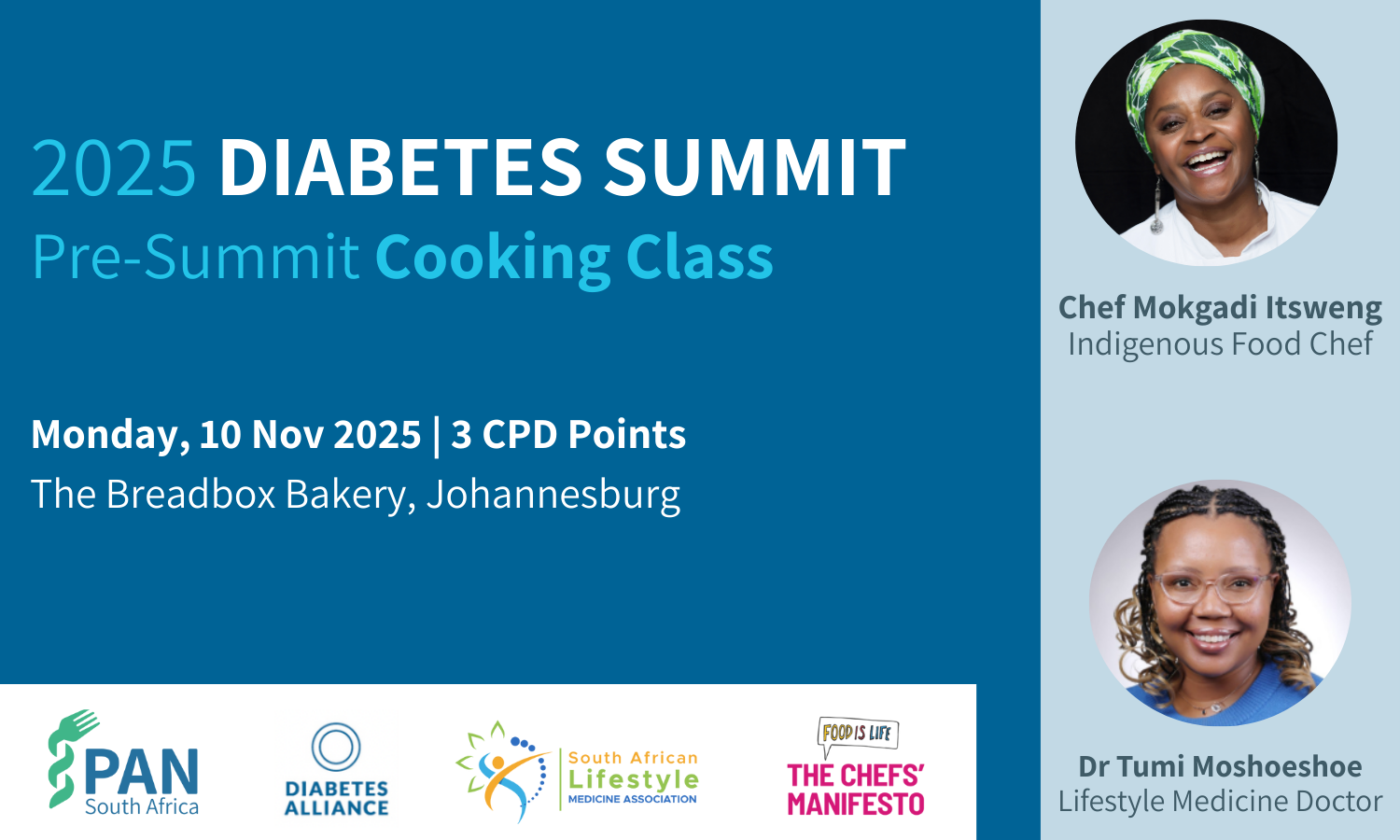
[Johannesburg, South Africa] What happens when chefs, doctors, and dietitians step into the same kitchen? Ahead of World Diabetes Day (14 November) and the 2025 Diabetes Summit, healthcare professionals in Gauteng are swapping lab coats for aprons to discover how flavour can fight diabetes.
Hosted by the Physicians Association for Nutrition (PAN) South Africa, in partnership with the Diabetes Alliance, South African Lifestyle Medicine Association (SALMA), and The Chefs’ Manifesto, the “Food is Medicine” Cooking Class is a first-of-its-kind, hands-on culinary lab where medical science meets the sizzling sounds and colours of indigenous South African ingredients.
Inside The Bread Box Bakery in Midrand, doctors will slice, stir, and season alongside celebrated food champion Chef Mokgadi Itsweng, preparing dishes inspired by Africa’s rich culinary heritage, from the vibrant “7-Colours African Bowl” with sorghum, sweet potatoes, and bambara beans, to refreshing infusions featuring hibiscus, berries, and lemon verbena. Every dish tells a story of health, heritage, and sustainability, proving that nutritious eating can be deeply satisfying and full of flavour.
“My passion for food is the guiding engine for my advocacy for a healthy plant-based and indigenous food system,” says Chef Mokgadi Itsweng of The Chefs’ Manifesto. “This cooking class offers me the opportunity to showcase healthy food in a simple, fun, and affordable way. Working with healthcare professionals like Dr Tumi Moshoeshoe makes this class a powerful intervention backed by science. I’m looking forward to learning from the doctors too, so I can translate science into easy, accessible activities that my community can use to change their nutrition and lifestyle habits.”
Diabetes is now South Africa’s leading cause of death, according to Statistics South Africa’s 2022 Mortality Report, overtaking HIV and heart disease. The International Diabetes Federation (IDF) estimates that 4.3 million South Africans live with the condition, a number that continues to rise. Lifestyle change remains the most effective treatment, yet most doctors receive little formal nutrition education. As the most trusted voices in healthcare, they are key to inspiring patients to eat well, but first, they need the tools to make food part of medicine.
“Doctors and healthcare professionals are often taught what to prescribe, but not how to put nutrition into practice,” says Dr Nanine Wyma, Executive Director of PAN South Africa. “This class gives them practical, culturally relevant tools to turn dietary advice into everyday meals. It bridges the gap between medical science and the kitchen; where prevention and healing truly begin.”
“Empowering healthcare workers with practical nutrition skills directly supports South Africa’s National Strategic Plan for the Prevention and Control of NCDs,” explains Dr Patrick Ngassa Piotie, Chairperson of the Diabetes Alliance, official host of the Diabetes Summit. “When healthcare providers and patients learn side-by-side how to prepare balanced, affordable meals, they’re more likely to sustain healthy habits and recognise early warning signs of diabetes. This is how we translate policy into everyday action.”
Specialist physician Dr Tumi Moshoeshoe, who will co-facilitate the class, believes collaboration between chefs and clinicians is long overdue. “Patients often believe a ‘diabetes diet’ has to be expensive or unflavourful, and clinicians underestimate how food environments drive choices,” says Dr Moshoeshoe. “The traditional African diet, rich in grains, legumes, and seasonal vegetables, supports excellent diabetes control. Reconnecting with this heritage offers both cultural and clinical value.”
This concept of “food as medicine” is backed by research. A study by PAN South Africa, published in the South African Journal of Clinical Nutrition, found that participants in a 21-day plant-based nutrition programme saw improved blood sugar control, weight loss, and reduced medication dependency.
For the Chefs’ Manifesto, which unites over 1,800 chefs globally under the UN Sustainable Development Goals, the class demonstrates how flavour can drive systemic change. “No single sector, solution, or person can fix our broken food systems alone,” says Paul Newnham, CEO of the SDG2 Advocacy Hub. “When chefs, healthcare professionals, and policymakers connect, we unlock creative, inclusive, transformative solutions. Celebrating local ingredients strengthens economies, protects biodiversity, and connects people to the source of their food.”
“Every time we eat, we have an opportunity to feed disease or fight it,” says Dr Roxanne Becker of SALMA. “Through this class, we want health professionals to experience firsthand how preparing, tasting, and enjoying healthy food can transform health.” Her colleague, Dr Lydia Altini, adds: “Lifestyle medicine is the foundation of future diabetes care in South Africa, not an optional extra. By empowering people to eat more whole, plant-based foods and live more healthfully, we can build stronger, more resilient communities.”
Under this year’s World Diabetes Day theme, “Diabetes and Well-being,” PAN South Africa and its partners are calling on healthcare professionals to take the lead in prevention. The Food is Medicine Cooking Class isn’t just about learning recipes, it’s about reshaping how the medical community thinks about treatment, health, and connection. By turning clinical science into tangible food experiences, the event aims to inspire a new generation of doctors who can confidently say: “Let’s start with what’s on your plate.”
Event Details:
Date: Monday, 10 November 2025 | Time: 10:00 AM – 2:00 PM
Venue: The Bread Box Bakery, Carlswald Décor Centre, Midrand, Johannesburg
Tickets: R350 | R250 for PAN and SALMA Members
Link to book: bit.ly/4qCQljl
ENDS
About PAN South Africa
Physicians Association for Nutrition (PAN) South Africa, established in 2020, is the national chapter of a global medical non-profit organisation in over 10 countries. We work with health professionals, students and policymakers on the role of plant-forward dietary patterns for chronic disease, climate change and pandemic risk.
PAN South Africa Media Contact
Shaiyah Nosipho Luthuli – Communications Manager
Email: shaiyah.nosipho@pan-sa.org; +27 72 579 5222
